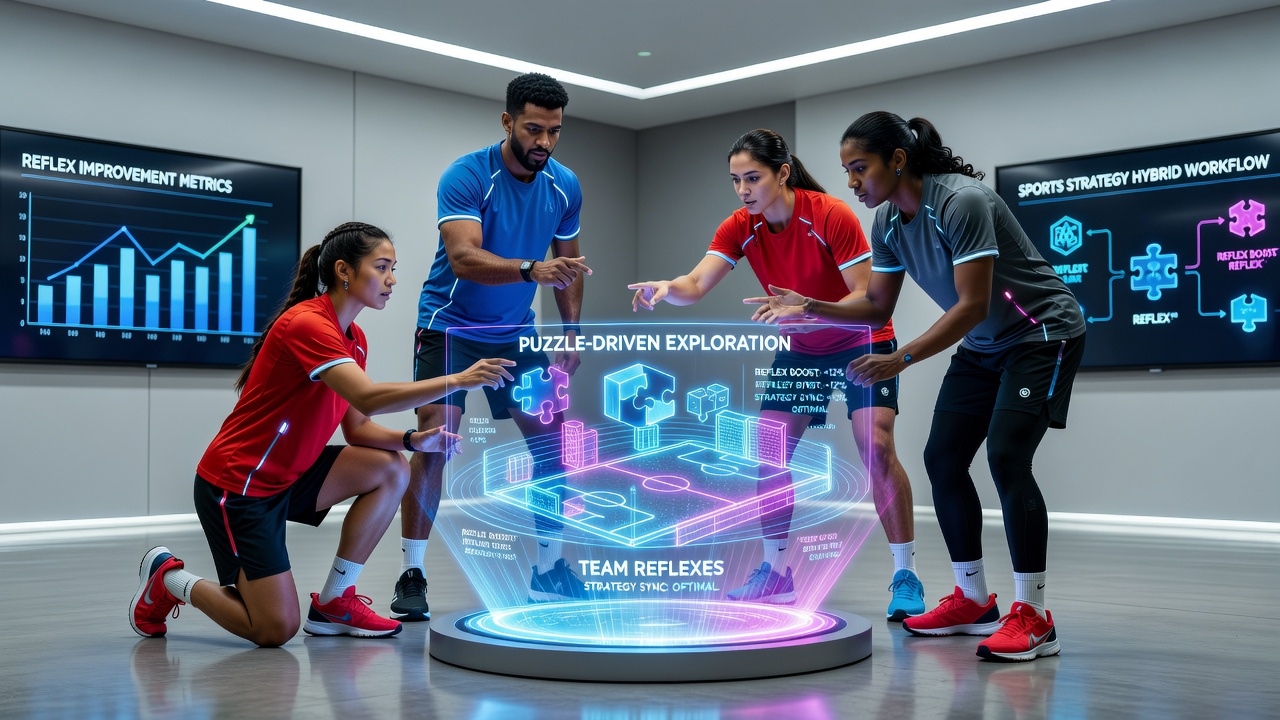
How Puzzle-Driven Exploration Influences Team Reflexes in Download-Free Sports Strategy Hybrids
Download-free sports strategy hybrids combine puzzle-driven exploration with real-time athletic competition, and these platforms require participants to solve spatial challenges while coordinating team movements across shared digital arenas. Research from the University of Sydney shows that such mechanics train rapid decision sequences because explorers must map hidden pathways before executing synchronized passes or defensive shifts. Data indicates these sessions often last between five and fifteen minutes, which forces groups to integrate deductive reasoning with physical reflexes under consistent time pressure.
Core Mechanics in Browser-Based Hybrids
Players enter zero-install environments where puzzle layers overlay standard sports fields, and exploration phases reveal terrain alterations that affect ball trajectories or player positioning. Teams allocate roles so one subset decodes sequential logic gates while others maintain formation readiness, and this division creates feedback loops that sharpen collective response times. Figures from the Entertainment Software Association reveal participation in these hybrids grew 18 percent year-over-year through late 2025, with November 2026 projections pointing toward further adoption on mobile and desktop browsers alike.
Exploration segments typically present branching routes guarded by pattern-matching obstacles, and successful navigation grants temporary advantages such as boosted speed zones or visibility upgrades. Reflex training emerges because athletes must transition instantly from puzzle resolution to on-field action, and observers note that repeated exposure reduces hesitation intervals during live matches. Studies conducted at Canadian institutions confirm measurable gains in peripheral awareness when groups repeat these blended scenarios over multiple sessions.
Reflex Development Through Coordinated Exploration
Team reflexes improve when puzzle solutions demand simultaneous input from multiple members, since one delay can collapse an entire offensive sequence. Platforms record metrics on reaction latency before and after exploration segments, and those measurements demonstrate tighter synchronization once players internalize common deduction patterns. Active voice responses become critical because the environment updates in real time, and any lag in interpreting newly revealed map data directly impacts athletic outcomes.
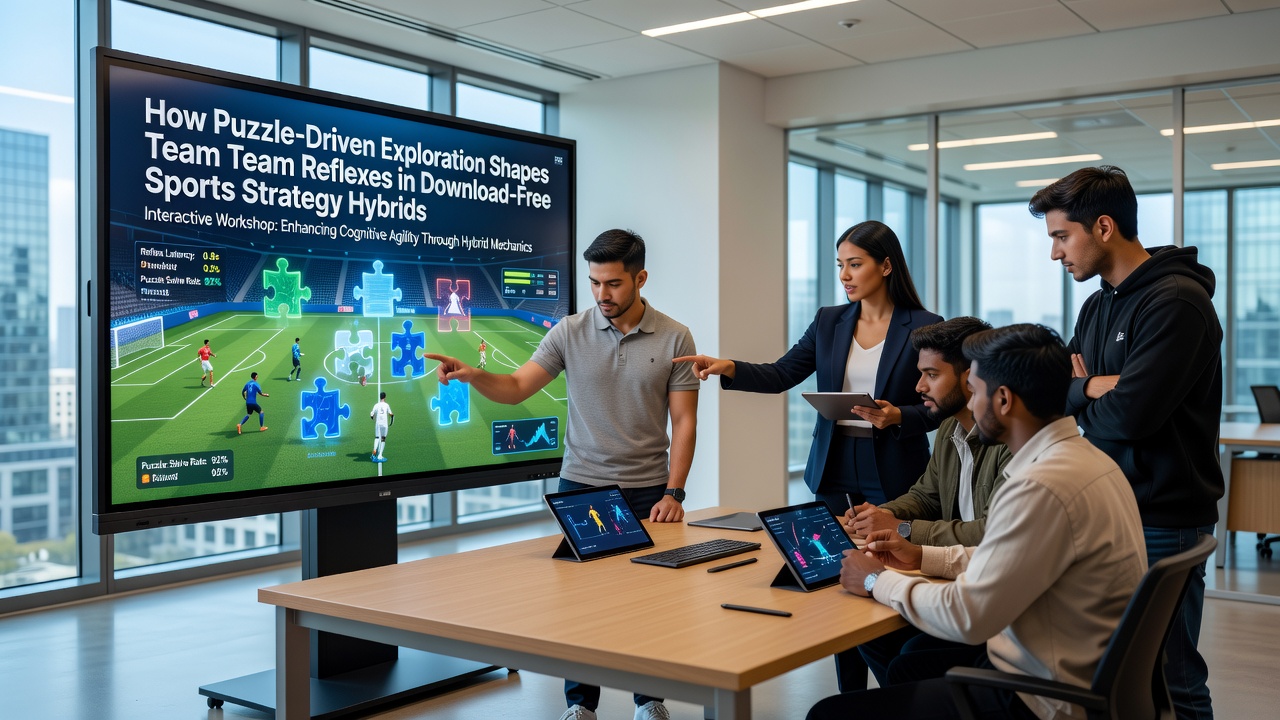
Groups that rotate puzzle responsibilities across matches develop broader skill coverage, and this rotation prevents bottlenecks during high-stakes moments. Evidence suggests that hybrids emphasizing shared exploration produce faster consensus on tactical adjustments compared with pure strategy titles, because the puzzle phase already rehearses joint problem-solving. In November 2026, several browser platforms introduced updated exploration tools that layer additional variables onto existing sports rulesets, further linking deductive speed with physical execution.
Patterns Observed Across Platforms
Longer sessions reveal recurring sequences where early puzzle progress predicts later reflex accuracy, and analysts track these correlations through anonymized performance logs. Teams that treat exploration as a collective mapping exercise rather than individual tasks achieve higher win rates in subsequent athletic phases. Reports compiled by the International Game Developers Association highlight how design choices around puzzle density directly influence the training of split-second coordination under variable conditions.
Browser infrastructure supports instant session joining, which means new members must absorb ongoing exploration context while contributing to reflex-based plays. This onboarding dynamic accelerates pattern recognition across the group because veterans verbalize or signal discoveries in real time. Data from regional studies in Australia shows that consistent participation correlates with improved performance in unrelated cognitive tasks that also require rapid integration of spatial information.
Conclusion
Download-free sports strategy hybrids continue to evolve through the integration of puzzle-driven exploration with athletic reflexes, and platform metrics from November 2026 confirm sustained user engagement across these formats. The interplay between deductive mapping and synchronized team responses produces measurable training effects that researchers continue to document through controlled observation. These environments demonstrate how browser accessibility enables repeated practice of blended skill sets without installation barriers, and the resulting data streams provide ongoing insight into collective performance patterns.